Weeds love a Florida summer more than you do
Give a weed heat, rain, and a thin spot in the lawn and it'll move right in. South Florida hands out all three from about May through October. By the time most people notice, the weeds have already flowered, gone to seed, and lined up the next generation.
Weeds also cost you. They crowd out your grass, drink the water you're paying for, steal the nutrients meant for the lawn, and leave bare patches behind when they die back.
The usual suspects around here
- Dollarweed. Round, shiny leaves that look like tiny lily pads. It loves wet ground, so a summer of storms or a sprinkler that runs too long is basically an invitation.
- Sedges. They pass for grass at first glance, but they grow faster, stick up a day after you mow, and have a triangle-shaped stem if you roll one between your fingers.
- Crabgrass and other grassy weeds. They spread into thin spots and the hot, sunny edges along the driveway and sidewalk.
- Broadleaf weeds. The random stuff that pops up anywhere the turf is thin or stressed.
Each one behaves differently, and each one needs a different approach. That's the whole game.
Where weeds come from in the first place
Weeds are opportunists. They show up wherever the grass gives them an opening.
- Thin spots left behind by chinch bug or fungus damage.
- Shady areas under trees where the grass never gets thick.
- Grass mowed too low, which lets sunlight hit the soil and wake up weed seeds.
- Sprinklers that keep the ground soggy, which dollarweed and sedges love.
- Seeds that blow in from the empty lot down the street, or ride in on a mower from the last yard it cut.
Treating the weeds without fixing the opening is like mopping the floor with the faucet still running. That's why we look at the whole lawn, not just the weeds sitting on top of it.
Targeted treatments that leave the grass alone
Blasting the whole yard and hoping for the best is how lawns get hurt. The job is to take out the weed and leave the grass alone. St. Augustine is picky about what gets sprayed on it, and the wrong product at the wrong time of year, especially in the summer heat, can hurt the grass worse than the weeds ever did.
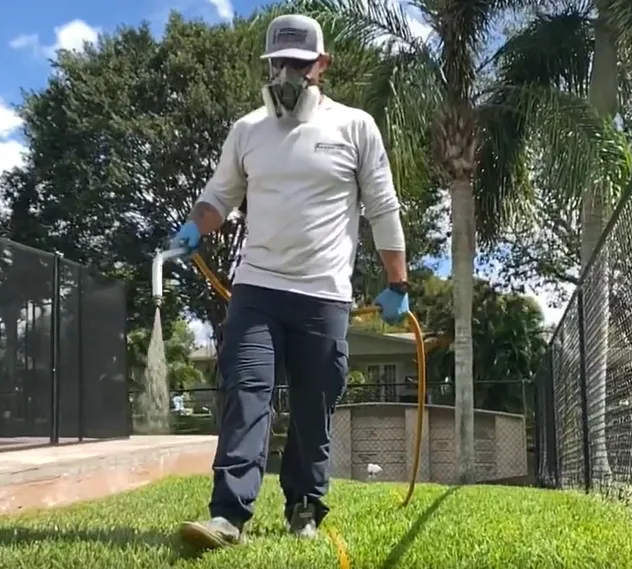
That's a big reason weed control belongs with a certified Lawn & Ornamental pro. We treat weeds where they're growing, based on what the weed is and what kind of grass it's sitting in.
The best weed control is a thick lawn
Weeds move into thin, stressed, hungry turf. A lawn that's fed right and kept healthy fills in tight and leaves weeds nowhere to start. That's why weed control works best as part of our lawn care program, with fertilization and turf maintenance working right alongside it.
Mowing and watering matter too. Grass cut too short, or watered a little bit every day, makes life easy for weeds. If that's what's going on in your yard, we'll tell you, because fixing it beats fighting the same weeds forever.
On your second or third lawn company and still staring at the same weeds? Give us a call.
A word about weed and feed bags
The hardware store aisle is full of weed and feed, and it's tempting. Here's the catch. Those bags are fertilizer and weed killer in one, so in towns with a rainy season fertilizer ban, like Tequesta, the nitrogen in them falls under the same June through September restriction as any other fertilizer. And the weed killer half still has to be right for your grass and safe to use in the heat. There's more on the local rules on our fertilization page.