Dead patches don't happen overnight
It sure feels like they do. You walk out one Saturday and there's a brown spot the size of a car in the front yard. But almost every dead patch starts small. A few yellow blades along the driveway. A ring of off-color grass after a rainy week. Catch it early and it's a treatment. Catch it late and you might be shopping for sod.
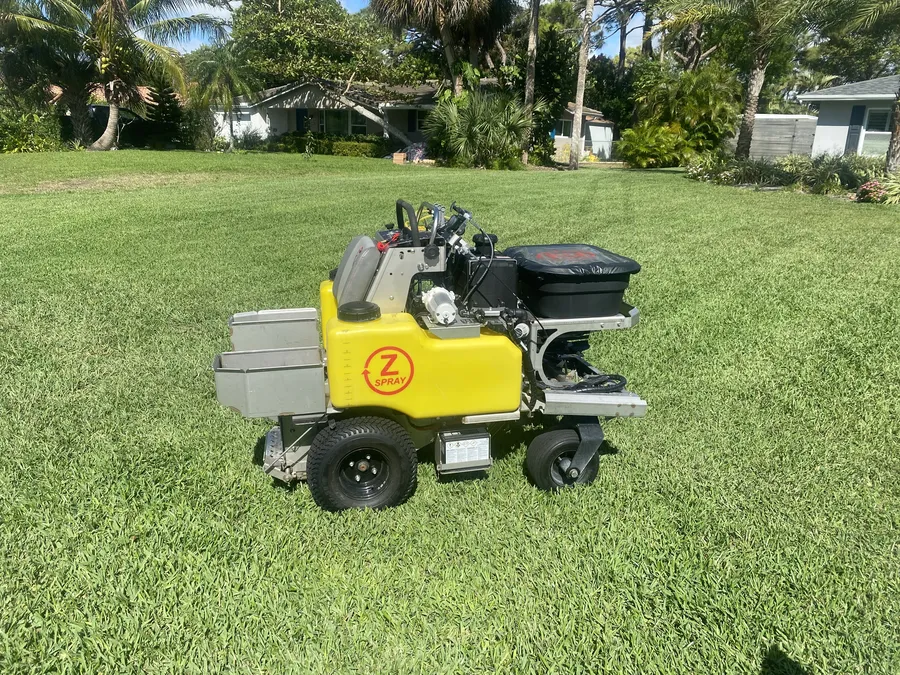
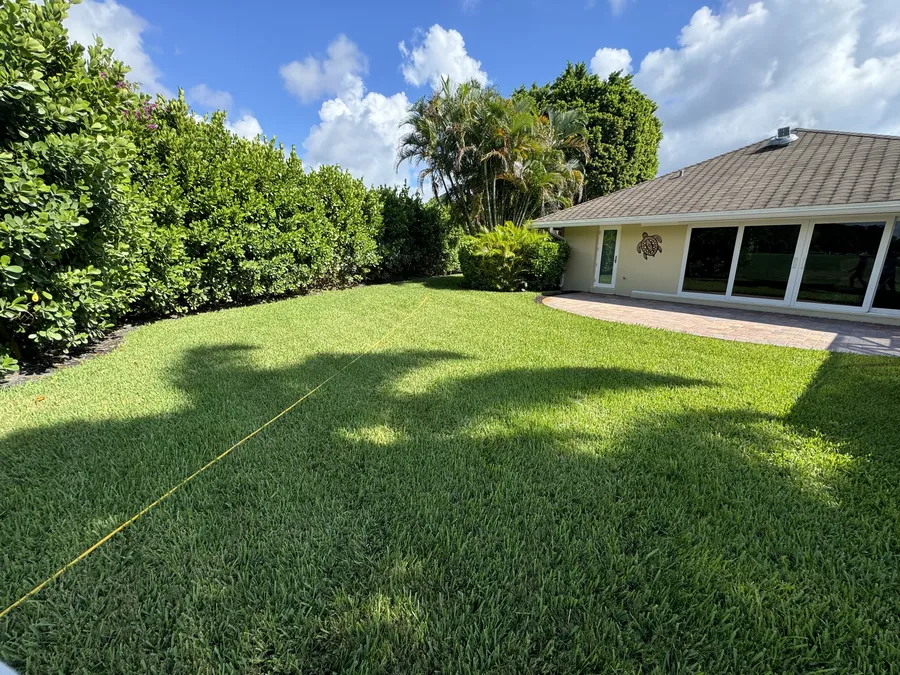
Turf maintenance is how we catch it early. It's ongoing care for the health of your grass, so problems get spotted while they're still small.
Chinch bugs, the St. Augustine killer
If your lawn is St. Augustine, and most lawns in Tequesta and Jupiter are, chinch bugs are enemy number one. University of Florida researchers rank the southern chinch bug as the second most expensive plant-feeding pest in the whole state (UF/IFAS fact sheet). They thrive in our warm, damp summers.
They're tiny and they hide down at the base of the grass, so you usually see the damage before you ever see a bug. It shows up as yellow to brown patches, often starting along the edges of the lawn or wherever the grass sits in full sun and dries out fast, like the strip next to the driveway. A lot of people think it's drought, turn up the sprinklers, and watch the patch keep growing anyway.
Lawn fungus after the rain
After a summer rainstorm, fungus is everywhere. Warm nights, wet grass, and humidity that never really leaves make South Florida a great place to be a fungus and a tough place to be a lawn. Fungus can show up as rings, irregular brown or straw-colored patches, or spots on the grass blades, and it spreads fastest when the grass stays wet for hours.
Watering in the evening makes it worse because the blades stay wet all night. If your sprinklers run after dinner, that's one of the first things we'll talk about.
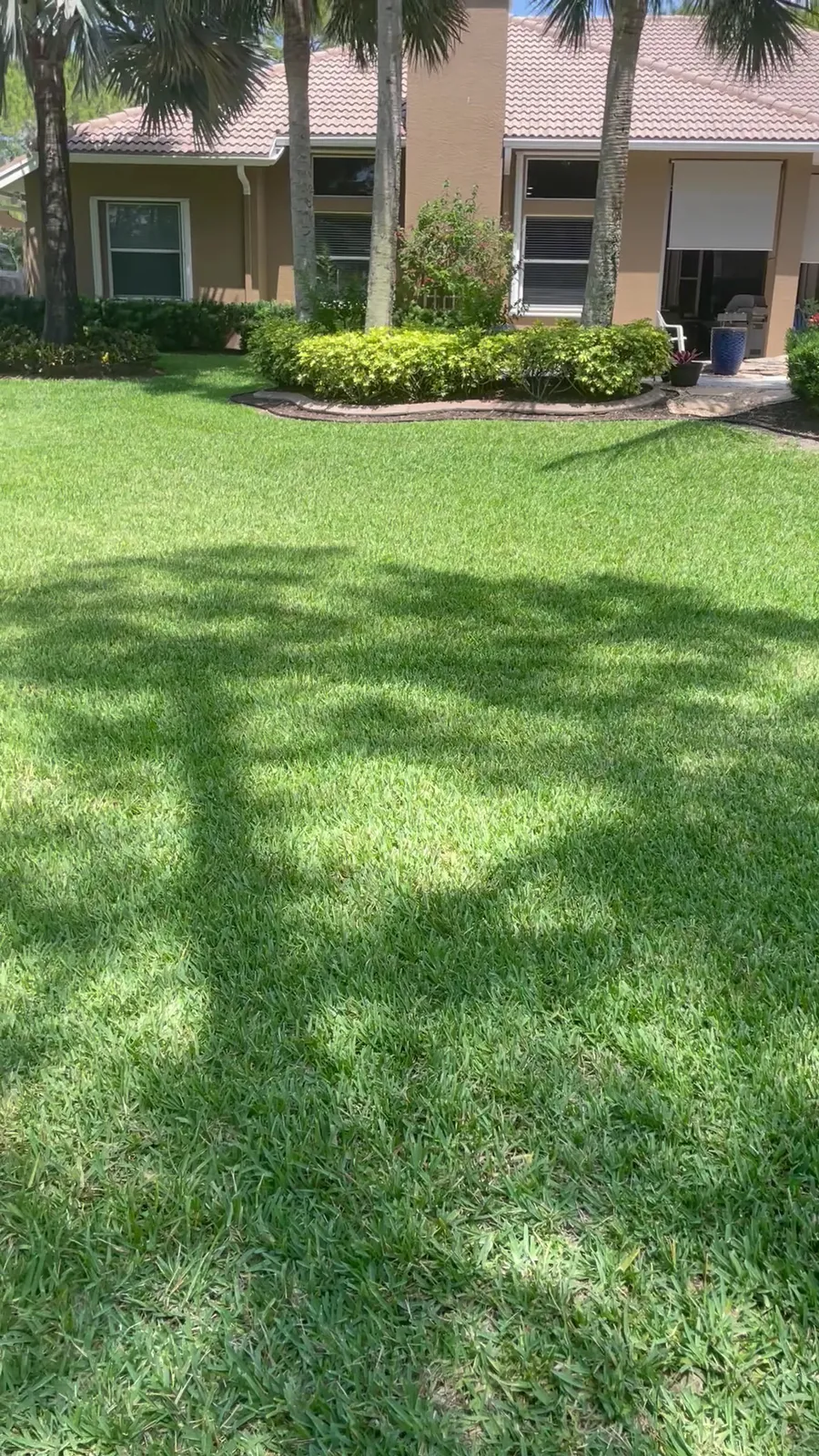
Turf stress from heat, water, and mowing
Not every bad spot is a bug or a disease. Grass gets stressed by summer heat, too much or too little water, mowing too short, dull mower blades, and shade from trees that have filled in over the years. And stressed grass is exactly what chinch bugs, fungus, and weeds go looking for.
Part of the job is figuring out which problem you actually have. Chinch bugs, fungus, and drought can look almost the same from the street, and treating the wrong one wastes time while the patch spreads.
Signs your turf needs attention
- Yellow or brown patches that get bigger week to week.
- Footprints that stay pressed into the grass instead of springing back, which is a sign of water stress.
- Rings, spots on the blades, or a straw-colored patch that shows up after a rainy stretch.
- Grass along the driveway or sidewalk that browns out first every summer.
- Thin areas where weeds are suddenly moving in.
Any one of these is worth a call. The sooner we see it, the smaller the fix.
How turf maintenance works with Frontline
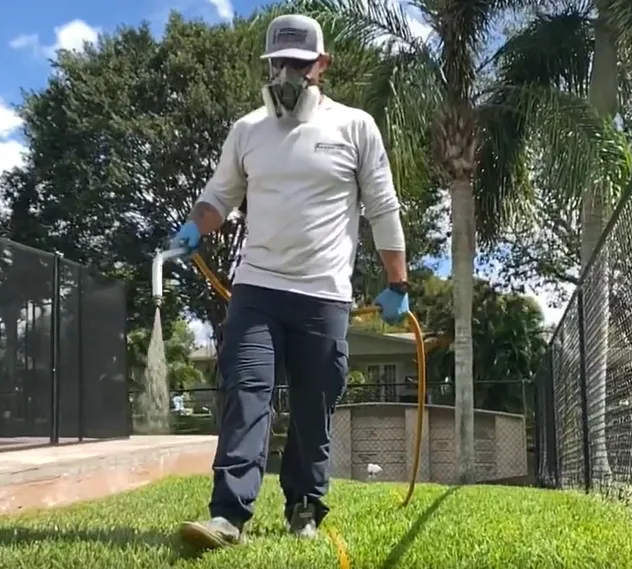
Turf maintenance runs alongside fertilization and weed control as part of our lawn care program. We watch for the early signs, treat problems when they show up, and give you specific recommendations for your yard, like when to water and how high to mow.
And because we're dually certified in household pest control and Lawn & Ornamental care, a bug problem in the grass gets handled by people who deal with bugs every day.