Sandy soil is a leaky bucket
Most of the ground around Tequesta and Jupiter is sand. Sand drains fast, which is great after a downpour and lousy at holding onto nutrients. Feed a lawn on sandy soil the wrong way and a good chunk of it washes past the roots with the next storm. The grass stays hungry, and the extra ends up in places it shouldn't, like our rivers and the lagoon.
That's why fertilization here comes down to timing and amounts. It's a plan, not a bag thrown down whenever the lawn looks a little pale.
Florida towns have rules about when you can fertilize
Here's something a lot of homeowners don't know. Many towns in our area have a rainy season fertilizer ban. In the Village of Tequesta, nobody, company or homeowner, can apply fertilizer containing nitrogen or phosphorus to lawns or landscape plants from June 1 through September 30 (Village of Tequesta notice). Unincorporated Martin County, right up the road, has the same June through September window and rules for the rest of the year too (Martin County ordinance). Other towns have their own versions, and the dates don't always match.
The details go further than the summer dates. Unincorporated Martin County bans phosphorus the rest of the year as well and requires at least half the nitrogen in lawn fertilizer to be slow-release. Palm Beach County's ordinance sets fertilizer-free zones next to the water.
The rules exist to keep fertilizer out of the water during the months it rains the hardest. For your lawn, it means the feeding schedule has to be planned around the calendar. A certified applicator builds the year around those dates so your grass gets fed when feeding actually counts.
What fertilization with Frontline looks like
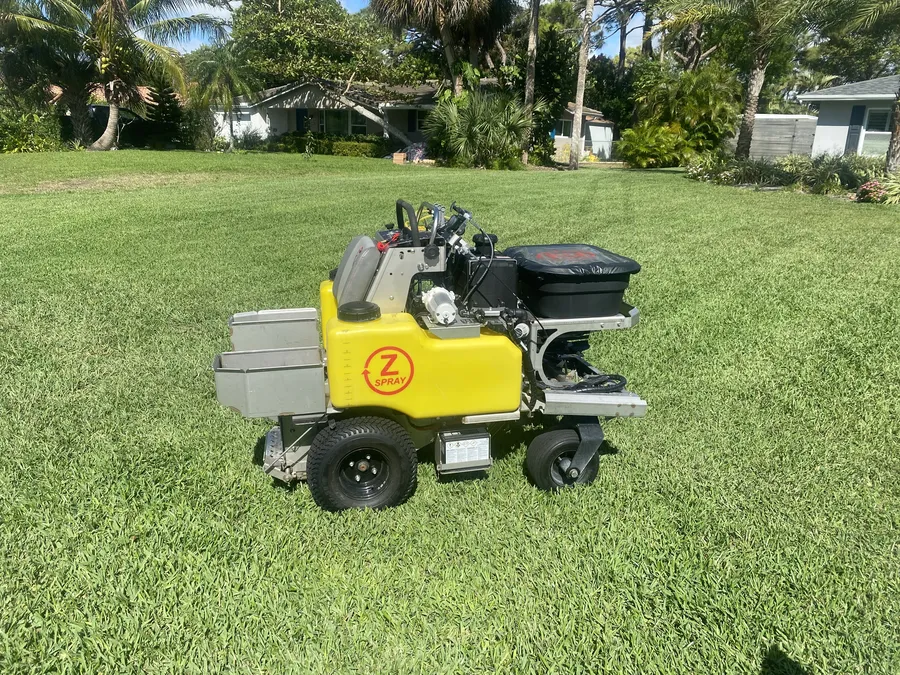
We set up a scheduled feeding program for your lawn based on the time of year, what your grass needs, and the rules where you live. Applications go down with professional equipment, including the ride-on spreader in the photo up top, which covers a big yard evenly and fast.
Fertilization works best as part of our full lawn care program. A well-fed lawn that's getting chewed up by chinch bugs or choked by weeds still looks rough, so feeding goes hand in hand with weed control and turf maintenance. The fertilizer helps the grass thicken up, and thick grass is the best weed control there is.
Why slow and steady wins on sand
Dumping a big dose of quick-release fertilizer on a sandy lawn is like pouring a whole pot of coffee into one cup. Most of it ends up on the counter. The grass can only take up so much at once, and the rest washes down past the roots with the next storm. Smaller, well-timed feedings, and fertilizer that releases slowly, keep the nutrients up where the grass can use them. It's the same idea behind Martin County's slow-release rule.
Signs your lawn is hungry
- The grass looks pale or yellow-green instead of deep green.
- It's thin, and weeds are filling the gaps.
- It's slow to bounce back after mowing, foot traffic, or a dry week.
- Bare spots aren't filling back in.
One catch. Not every yellow patch is hunger. Chinch bugs, fungus, and watering problems can look a lot like a lawn that needs food, and fertilizing a lawn that's really fighting bugs won't fix it. That's why we look before we treat.
Single homes and whole communities
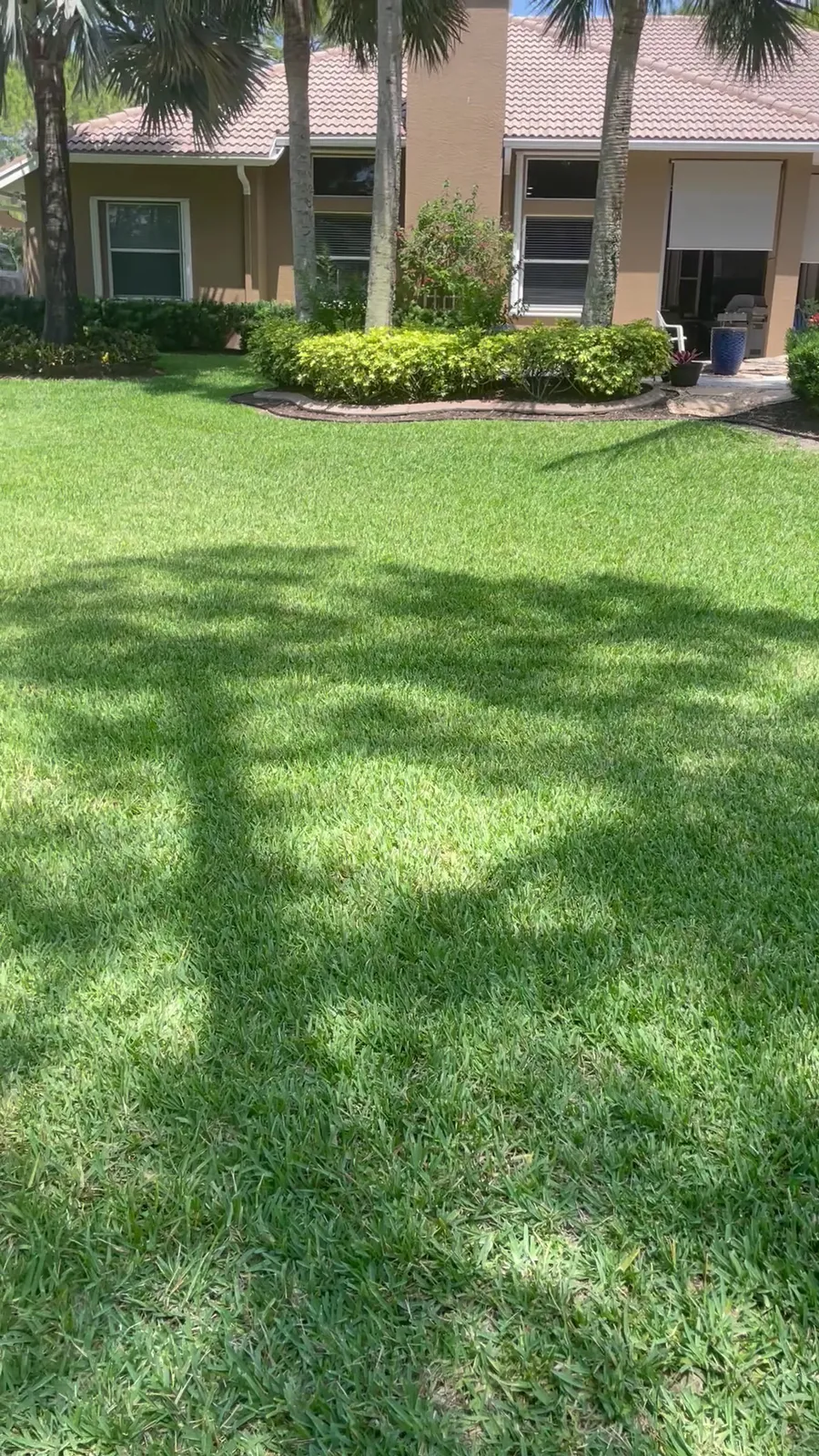
We take care of single-family lawns and entire residential communities. One customer told us their development has never looked so good. One front yard or a whole neighborhood of them, the approach is the same. Feed it right, on the right schedule, and keep an eye on everything else that can go wrong.